
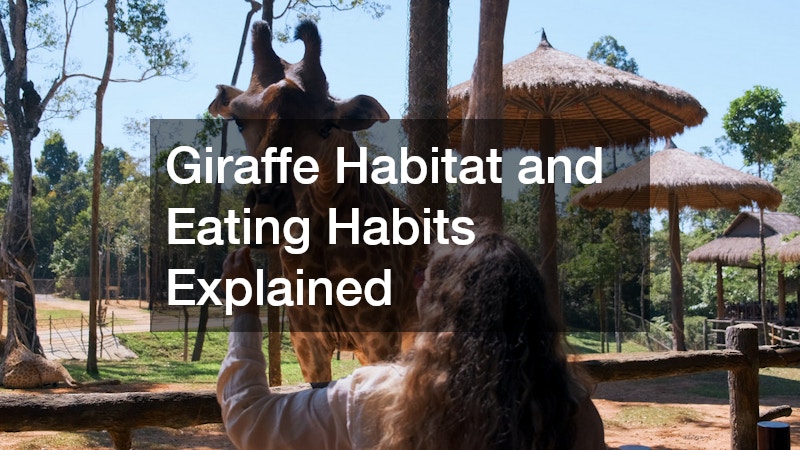
Giraffes are some of the most recognizable animals in the world, known for their towering height, long necks, and unique feeding behavior. Their survival depends heavily on their ability to adapt to the African environment, where food can be scattered and competition from other herbivores is high. Understanding the giraffe habitat and eating habits gives us a deeper appreciation of how these gentle giants thrive in the wild. One of the most fascinating aspects of their lives is the giraffe feeding experience, which is unlike any other animal in the savanna.
Natural Giraffe Habitat in the Wild
Giraffes primarily live in sub-Saharan Africa, where their habitats include savannas, grasslands, and open woodlands. These environments are warm, dry, and filled with scattered trees rather than dense forests.
This is important because giraffes rely on tall vegetation for survival.
In these habitats, giraffes often travel across large distances in search of food and water. Their environment is not uniform—some areas may be rich with leafy trees, while others may be dry and sparse. Because of this, the giraffe feeding experience is closely tied to seasonal changes and plant availability.
One of the key reasons giraffes thrive in these environments is their height advantage. They can reach leaves high in trees that most other herbivores cannot access. This reduces competition for food and allows giraffes to survive in areas where other grazing animals would struggle.
The African savanna also provides giraffes with enough space to move in groups, often called “towers.” These social groups help them stay alert to predators while they feed, making the giraffe feeding experience both social and strategic.
What Giraffes Eat and Why It Matters
Giraffes are herbivores, meaning they eat only plant material. Their diet mainly consists of leaves, buds, twigs, and fruits from trees and shrubs. Among all plants, the acacia tree is their favorite food source.
Acacia trees are common in giraffe habitats, but they are also covered in sharp thorns. Despite this, giraffes are perfectly adapted to eat from them. Their long, flexible tongues—often reaching up to 45–50 cm—allow them to carefully wrap around branches and pull off leaves while avoiding thorns. This is a key part of the giraffe feeding experience, as it demonstrates how specialized their anatomy is for survival.
From video-based observations and wildlife studies, giraffes are often seen feeding on acacia leaves high above the ground. They stretch their necks upward and use their tongues to strip foliage efficiently, sometimes spending hours feeding in a single tree. Their lips and tongues are tough and prehensile, meaning they can grasp and manipulate branches with precision.
Giraffes can consume large amounts of food in a day—sometimes up to 30–65 kilograms depending on size and availability. Because their diet is low in calories compared to their massive bodies, they must spend a significant portion of their day eating. This makes the giraffe feeding experience a constant, daily activity rather than a short mealtime.
How Giraffes Feed: A Unique Feeding Style
The giraffe feeding experience is one of the most unique feeding behaviors in the animal kingdom. Unlike grazing animals such as zebras or antelopes, giraffes are “browsers.” This means they feed on leaves and branches rather than grass.
To eat, a giraffe uses its long neck to reach high into trees. It then uses its tongue and lips to grab leaves and pull them into its mouth. The tongue is especially important—it is dark, rough, and highly flexible, allowing giraffes to safely navigate thorny branches without injury.
Once the leaves are in the mouth, giraffes use a special dental structure called a dental pad instead of upper front teeth. They press leaves against this pad using their lower teeth to strip foliage from branches. This process is efficient and allows them to feed quickly even in challenging environments.
From video observations, giraffes are often seen calmly moving from branch to branch, carefully selecting the most tender leaves. This selective feeding behavior is another key part of the giraffe feeding experience, as they prefer nutrient-rich young leaves over older, tougher ones.
Their feeding posture can sometimes look awkward because of their height, but it is perfectly suited to their ecological niche. Even though they are tall, they must occasionally spread their front legs or bend their necks in unusual positions to reach certain angles, especially when feeding at lower heights.
Giraffe Feeding Experience and Survival Adaptations
The giraffe feeding experience is not just about eating—it is deeply connected to survival. Because giraffes live in environments where water and food can be scarce, they have developed remarkable adaptations.
One major adaptation is their ability to get most of their water from the leaves they eat. This allows them to survive for long periods without drinking water directly, especially during dry seasons. However, when they do drink, they must spread their front legs and lower their heads to reach water sources, making them vulnerable to predators.
Another important adaptation is their ability to feed at heights that other animals cannot reach. This reduces competition and gives giraffes exclusive access to food sources like high acacia branches. The giraffe feeding experience is therefore a balance between opportunity and risk—elevated feeding reduces competition but requires constant awareness of predators like lions.
Social behavior also plays a role. Giraffes often feed in groups, which improves their chances of spotting danger. While some individuals eat, others keep watch, ensuring the herd remains safe. This cooperative behavior enhances survival in the wild.
In addition, giraffes have thick saliva that helps protect them from sharp thorns if they are accidentally swallowed. Combined with their tough tongues and lips, this makes the giraffe feeding experience highly specialized for thorny environments.
Understanding the Giraffe Feeding Experience
The giraffe habitat and eating habits reveal a fascinating example of adaptation in nature. Living in the open savannas and woodlands of Africa, giraffes rely on height, strength, and specialized feeding tools to survive. Their diet of leaves—especially from acacia trees—shapes their daily behavior and movement patterns.
The giraffe feeding experience is a continuous process of browsing, selecting, and adapting. From their long tongues to their towering necks, every part of their body is designed to help them access food in a challenging environment. Watching giraffes feed offers a glimpse into how evolution has shaped one of the most unique animals on Earth.
If you enjoyed learning about giraffes and their incredible feeding habits, explore more animal facts and discover how wildlife adapts to its environment.